Education Wall Painting Ideas To Inspire Young Minds

 Oct , 2025
- Berger Speaks
- 4 Min Read
Classrooms feel different when walls begin to teach. An education-related wall painting turns a blank surface into a steady companion for lessons, helping pupils recall facts, practise skills, and feel proud of their school. From alphabets and number lines to maps and messages, a school wall painting can carry ideas that spark curiosity without crowding the room.
This guide shares concepts, themes, and steps for planning murals that suit Indian schools, with tips on safety, durability, and calm colour choices.
What Is An Education Wall Painting?
An education wall painting is a planned mural or large-format graphic created for learning spaces in schools and colleges. It goes beyond decoration. A school wall paints is mapped to lessons, classroom routines, and the age of the pupils. It turns an empty wall into a visual aid that teachers can point to during explanations and pupils can revisit during quiet work. In many campuses, it sits alongside signage, display boards, and wayfinding, so the whole environment supports learning.
Purpose Of Educational Wall Art
Here you will explore the purpose of educational wall art:
- Reinforce curriculum topics through diagrams, timelines, number lines, maps, and labelled visuals.
- Prompt curiosity with puzzles, quick questions, and seek-and-find elements.
- Celebrate school culture by showing values, clubs, and achievements in a single visual story.
- Create calm or energy through intentional colour for walls for different zones.
- Improve accessibility with clear icons, bilingual captions, and consistent typography.
- Replace cluttered posters with a single, well-planned education mural painting that lasts longer.
Benefits Of Wall Painting In Educational Spaces
Here are the benefits of wall painting education spaces:
Encourages Creative Learning
Pupils interact with images faster than they do with long text. A thoughtfully placed exterior wall paint invites them to trace shapes, spot patterns, or link facts. Primary children can follow an alphabet jungle or a number trail. Older learners can compare world history bands, examine life cycles, or remember physics formulae because they see them daily. The wall quietly supports revision without extra worksheets.
Enhances Classroom Aesthetics
Colour and composition change how a room feels. Muted greens and soft blues are popular in reading corners because they reduce visual noise. Warmer accents add energy to activity zones. When a school painting design is cohesive, teachers do not need to tape many temporary charts that fade and curl. The room stays tidy and welcoming, which helps focus.
Communicates Values and Lessons
Values become easier to recall when pupils meet them in hallways and staircases. A corridor can show teamwork through a group project scene finished in durable enamel paint that resists scuffs. A staircase can carry short lines about perseverance, honesty, and kindness. The message appears during everyday movement between classes, which keeps it alive without long lectures.
Popular Educational Wall Painting Ideas
Here are the popular educational wall painting ideas:
Science and Space-Themed Murals
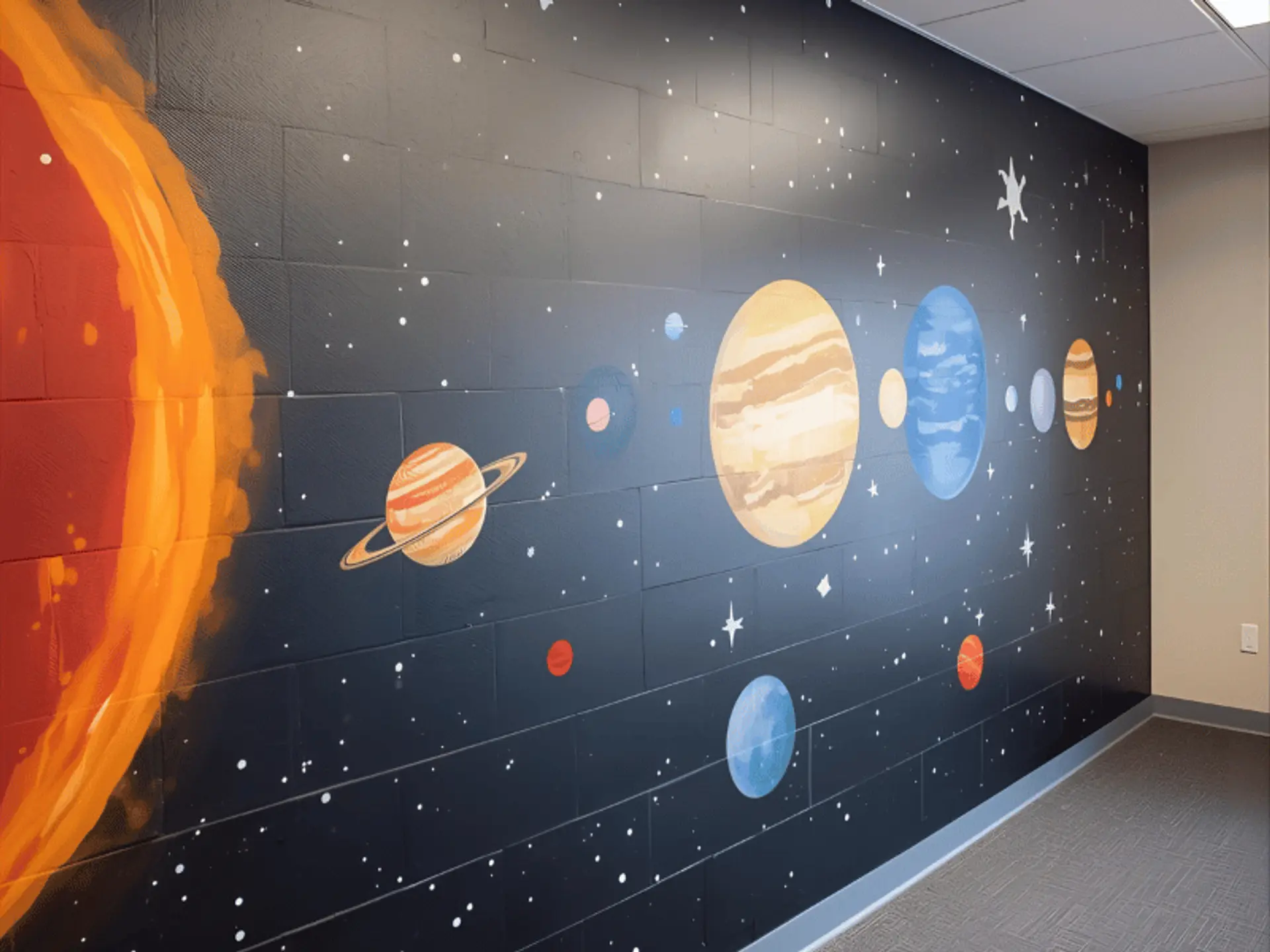
- Solar system with a simple distance scale and planet facts.
- Human body systems with clear labels in English and one regional language.
- Plant and butterfly life cycles.
- Highlights from Indian space missions to spark pride and curiosity.
These educational theme wall paintings help teachers answer quick questions at a glance.
Mathematical Concept Art
- Number lines, hundred squares, and fraction wheels.
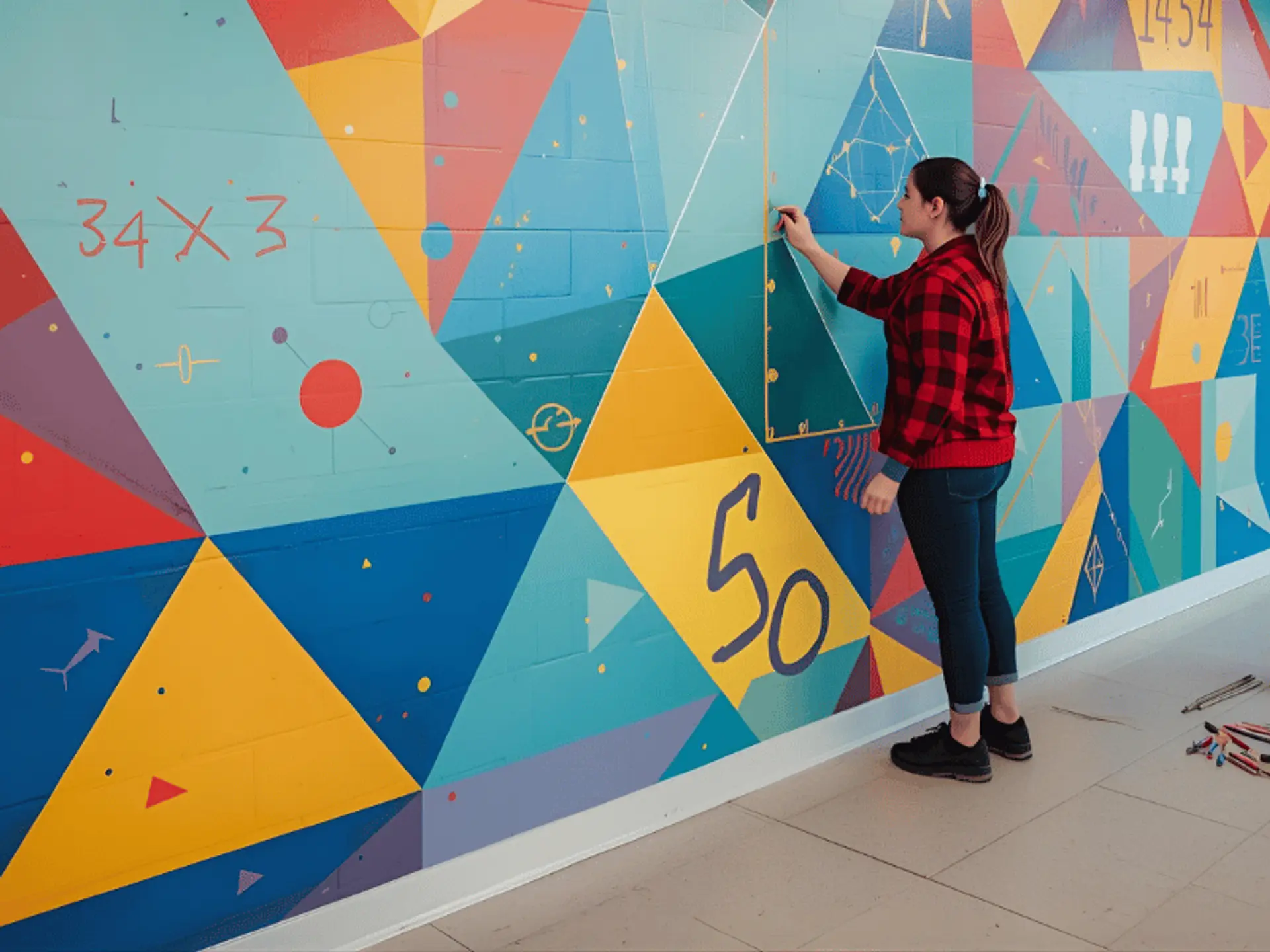
- Geometry gallery with shapes, angles, symmetry, and tessellation.
- Real-life maths such as cooking measures, bus timetables, and cricket statistics.
A maths-focused wall painting related to education turns abstract ideas into patterns pupils can see.
Language and Literature Murals
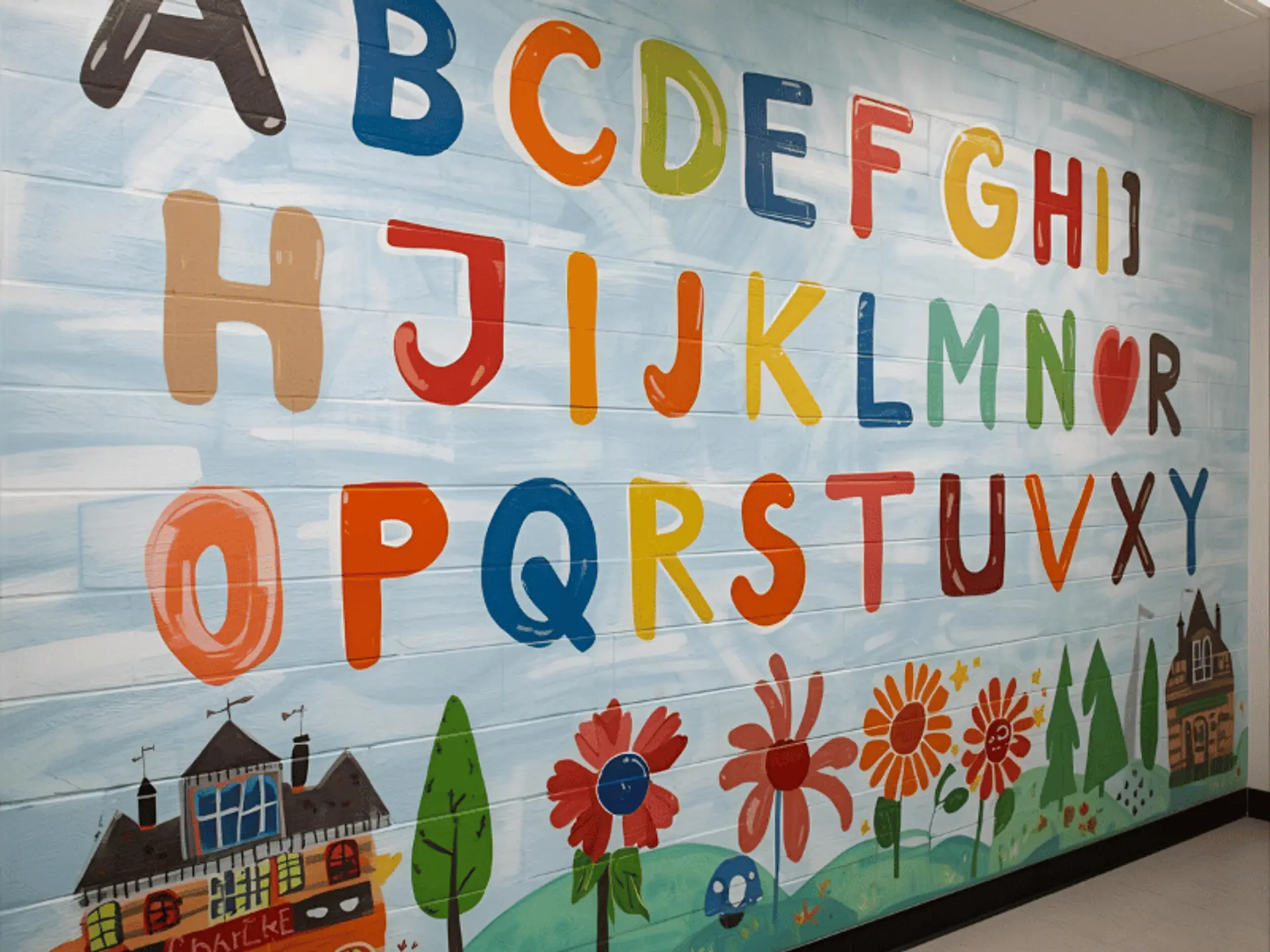
- Alphabet trails in English and a regional language to aid phonics.
- Grammar gardens showing parts of speech with icons.
- Literary map with authors and settings from Indian and world literature.
Vocabulary word wall with themes such as transport, festivals, and nature.
Environmental Awareness Murals
- Water cycle diagrams and rainfall maps of India.
- Waste segregation steps with friendly characters.
- Biodiversity panels showing native trees, birds, and pollinators.
These murals fit well near science labs and eco-club notice areas.

Inspirational and Motivational Wall Art
- Age-friendly quotes linked to effort, kindness, and curiosity.
- Portrait silhouettes of scientists, teachers, writers, and sportspersons.
- Goal boards where pupils can add sticky notes during mentoring sessions.
Types of Educational Wall Paintings
Here are the types of educational wall paintings:
Hand-Painted Murals
Hand-painted work gives texture and a bespoke look. Art teachers, local artists, or senior students can collaborate. Acrylic colours on a primed wall, followed by a clear protective coat, usually stand up to daily cleaning. This approach suits feature walls that need a personal touch.
Thematic Wall Paintings
A thematic set keeps a consistent style across many rooms. A “Journey Through India” theme can link reception, corridors, and social science classrooms with maps, monuments, textiles, and wildlife. The same palette and fonts tie spaces together so the campus feels planned rather than random.
Interactive Murals
Interactive murals invite participation. Elements might include chalkboard paint zones, whiteboard strips for daily vocab, or QR codes that link to teacher-made videos. In primary sections, height-marked puzzles encourage movement while learning.
Steps to Create an Educational Wall Painting
Here are the steps to create a wall painting for education:
Step 1: Choose a Theme
- Review the annual plan for your board, whether it is CBSE, ICSE, or a state board.
- Shortlist two or three concepts per space to keep the wall focused.
- Involve teachers, class representatives, and the art club to collect ideas.
- Decide the tone. Reading corners may be calm and cosy. Activity rooms can carry brighter accents.
- Note any bilingual needs early so captions are clear and consistent.
Step 2: Prepare the Wall Surface
- Repair cracks and sand rough patches for a smooth base.
- Apply a primer suited to plaster or masonry.
- Select low-VOC interior emulsions that are safe for classrooms and suitable for Indian weather conditions.
- Mask skirtings, switch plates, and display boards to keep edges clean.
- Move furniture away and ensure good ventilation during work.
Step 3: Sketch the Design
- Create a scale layout on paper with a simple colour key.
- Use the grid method or a projector to transfer outlines.
- Keep labels readable from typical viewing distances.
- Balance contrast around windows and tube lights so details do not wash out.
- Test a small patch before committing to the full wall.
Step 4: Apply Paints and Finishing Touches
- Block in large shapes first, then add fine details.
- Use stencils for repeated elements such as numerals, leaves, or stars.
- Add bilingual captions where needed and keep fonts consistent.
- Let coats cure properly between layers.
- Seal with a clear protective finish so the school painting wall is easier to wipe.
- Photograph the final layout and store a colour key for future touch-ups.
Ideas for Different Educational Spaces
Here are the ideas for different educational spaces:
Classroom Wall Painting Ideas
- Primary: Alphabet paths, shapes, number bonds, and habit icons combined into one composition.
- Middle School: World maps, science diagrams, and timeline bands above the board line.
- Senior Classes: Concept maps for physics, chemistry, biology, economics, or geography with clean lines and fewer characters to reduce distraction.
Library and Reading Zone Murals
- Reading tree with book titles as leaves, updated each term.
- Windows-to-the-world mural that shows landmarks emerging from open books.
- Poem wall with magnetic or Velcro cards so pupils can curate selections.
- Calm palette that supports longer reading sessions.
School Corridor and Staircase Murals
- Safety and etiquette icons for walking, queuing, and keeping left.
- Stair risers numbered with quick facts or vocabulary for micro-revision.
- House boards for points, attendance, and upcoming events.
- The Heritage gallery shows local history to connect the school with the community.
Maintenance and Safety Tips
Here are the maintenance and safety tips:
- Prefer washable, scuff-resistant finishes in high-traffic areas.
- Plan light cleaning once a term with soft cloths and mild soap.
- Keep a labelled box of leftover paints for periodic touch-ups.
- Avoid very glossy coatings near boards, as glare can reduce visibility.
- Ensure artwork never covers emergency signs or fire equipment.
- Check walls annually to update facts and replace worn sections.
- Record supplier names and colour codes for easy reordering.
Conclusion
Education wall painting brings lessons, values, and school identity onto the walls in a purposeful way. With a clear theme, careful surface preparation, and simple maintenance, the result supports daily teaching while keeping rooms pleasant to learn in. Schools can start with one classroom or a small library corner, review feedback from teachers and pupils, then extend the approach to corridors and staircases as budgets allow. This steady plan creates a consistent visual language across the campus and keeps learning visible throughout the day.
check for any query you have about the blog
Frequently Asked Questions
Select a theme that supports current learning goals and suits the age group. For primary corridors, alphabets, numbers, nature, and good habits work well. In the middle and senior sections, subject concept maps, world geography, and timelines are practical. A unifying theme across the campus helps connect spaces.
Use balanced palettes that match the activity. Calming greens and soft blues suit libraries and counselling rooms. Warm neutrals with one bright accent can energise activity zones without overwhelming pupils. In classrooms, maintain a clear contrast near the board so notes remain readable. Test sample swatches on the actual wall and observe them at different times of day before finalising.