12+ Top Floor Paint Designs to Elevate Your Home Décor

 Nov , 2025
- Berger Speaks
- 4 Min Read
Floors set the rhythm of a home. Change the surface and the room reads differently, often without replacing tiles or stone. Colour can cool a sunlit lounge, pattern can lift a narrow passage, and the right finish can cope with daily footfall in Indian conditions. A thoughtful floor paint design gives that flexibility with measured effort and sensible cost.
In this article, you will explore why many homeowners consider painted floors, which paints are suited to Indian homes, twelve design ideas for indoor and outdoor spaces, practical selection advice, care tips, and short FAQs.
Why Choose Floor Paint Over Traditional Flooring Options?
Floor paint offers a smart refresh without demolition or long shutdowns. Work can be staged room by room, and life continues. With the right system of primer, body coat and clear sealer, the finish resists scuffs, routine mopping and seasonal humidity, and marks are easy to sand and touch up. That practicality suits kitchens, family rooms and busy corridors.
It is cost-conscious, adding colour, tone and pattern without incurring the cost of new substrates. Choice is wide: soft neutrals calm bedrooms and studies, deeper shades ground living rooms, patterns tidy garages and gyms, while epoxy gives flats a smooth, wipeable surface.
Paints That Are Suitable for Floor Paint
Floors in Indian homes vary widely. Kota stone, kadappa, terrazzo, older ceramics, and plain concrete all appear in the same building. Start by matching the coating to the surface and the expected traffic.
- Floor Enamel: Hard-wearing and suitable for high-traffic areas when primed correctly. Often used on concrete and timber boards.
- Dedicated Floor Paint: Built for abrasion resistance and regular cleaning. Available in practical shades that hide dust between mops.
- Latex or Acrylic Paint: A quick-drying choice for low to moderate traffic rooms when sealed with a compatible clear coat.
- Epoxy Systems: Two-part coatings that cure into a tough, seamless film. Favoured for utility rooms, basements, and parking bays.
Good preparation is the basis of success for any floor or tile paint system: degrease thoroughly, patch cracks, abrade glossy tiles where possible, check moisture, and follow the product label for primer and recoat intervals.
Get Your Colour Consultation Today!
Best Floor Paint Design Ideas for Your Home
Ideas in this section work across lounges, bedrooms, kitchens, passages, verandas, and small gardens. With the right system, many also suit balconies and terraces that face the sun and the monsoon.
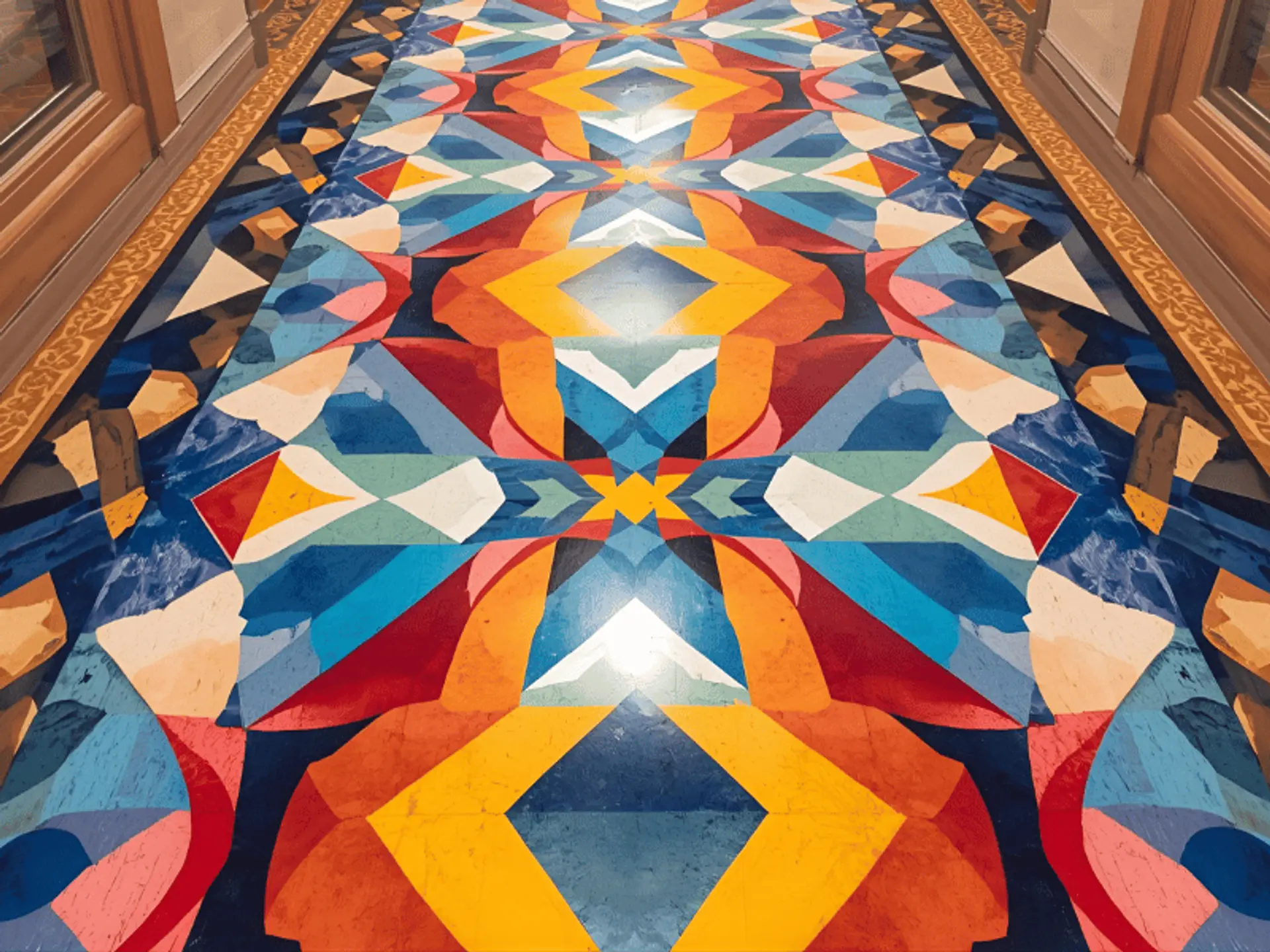
1. Geometric Floor Paint Designs
Geometry gives instant structure. Checkerboards, diamonds, and bold stripes are easy to map with chalk lines and masking tape. Choose two connected colours so the floor links back to curtains or upholstery. In long corridors, transverse bands reduce the tunnel feel. Homeowners searching for floor paint patterns often begin with two tones, then add a slim border as a frame.
2. Marble Effect Paint Design for Floor
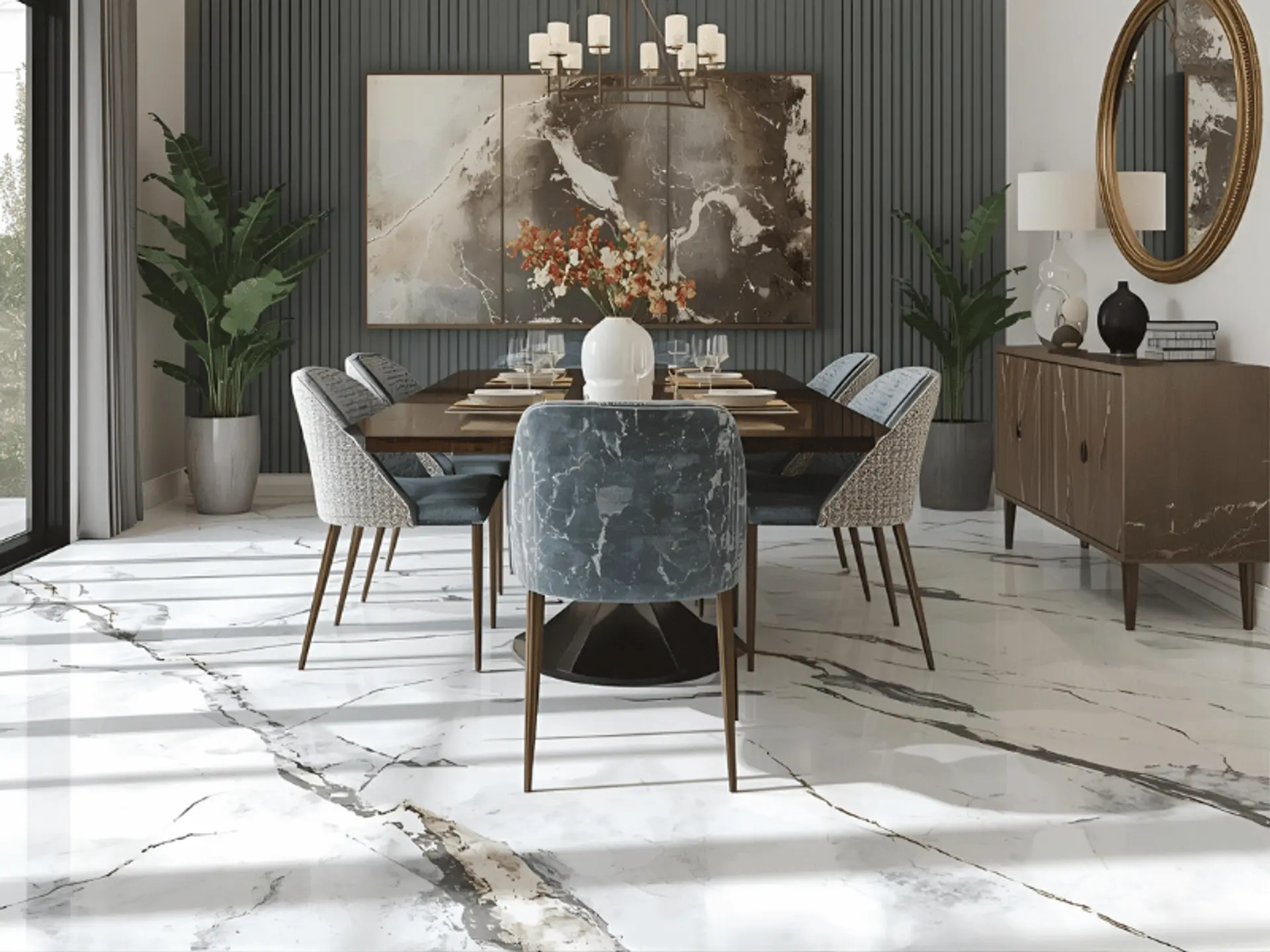
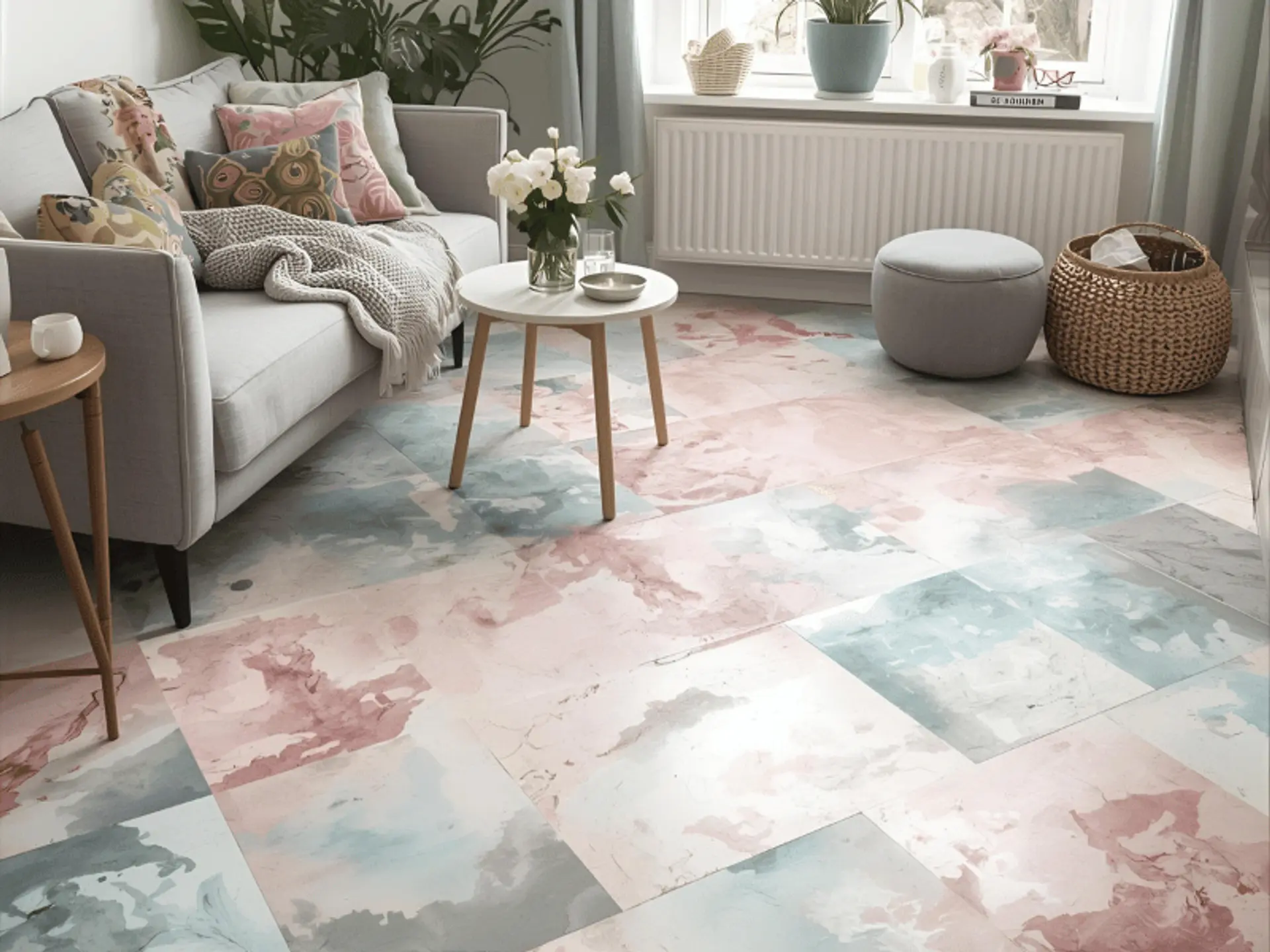
A soft marble effect brings quiet elegance to foyers and dining areas. Lay a pale base, then suggest feathery veins with a dry brush and glaze. Keep contrasts gentle so furniture remains the hero. For added toughness in busy zones, enamel paint for floor applications may be used with a compatible sealer to protect the finish. The approach sits naturally within the wider paint design for the floor category, where the look of stone is suggested rather than installed.
3. Terracotta and Earthy Tone Floor Ideas
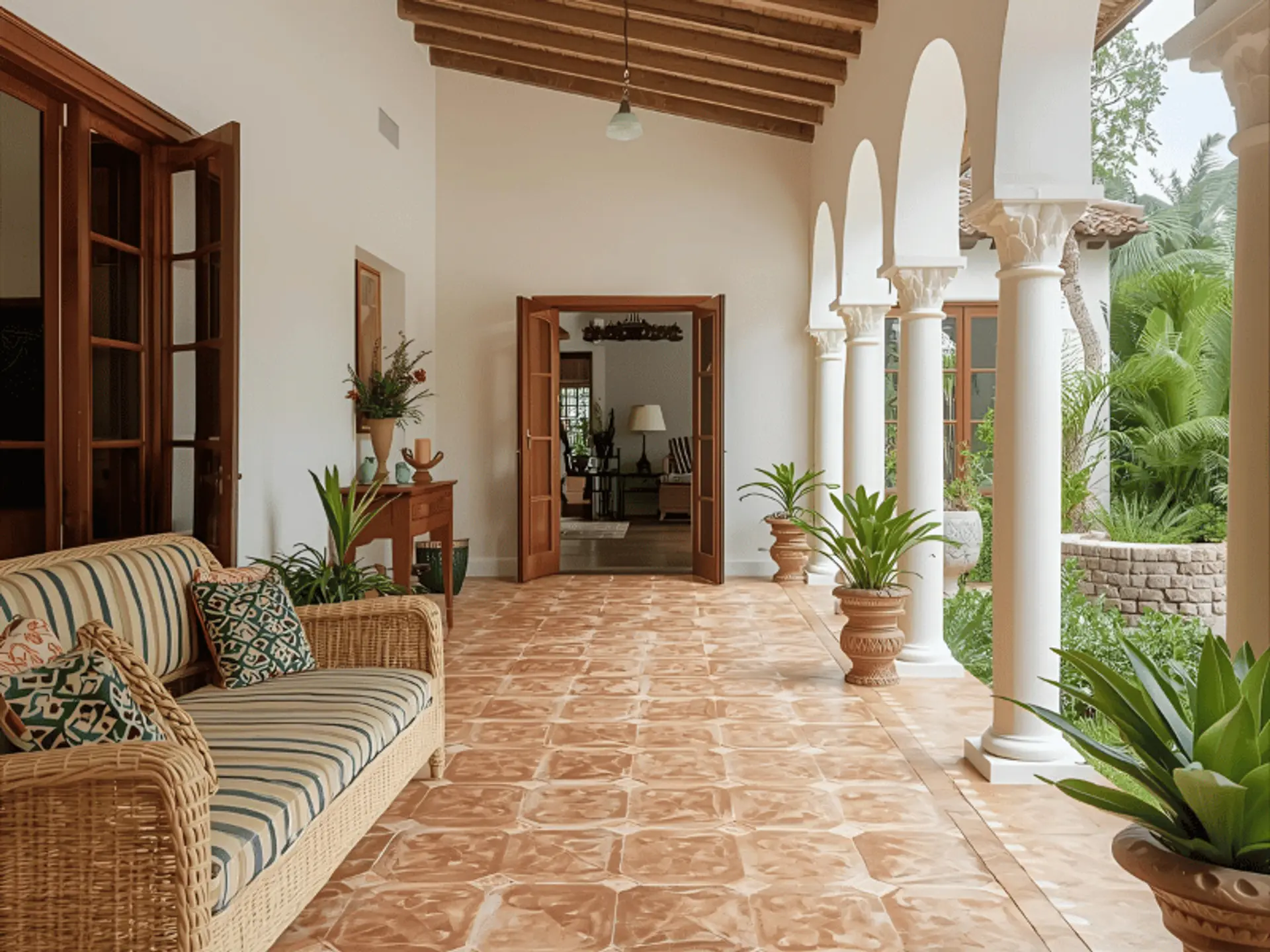
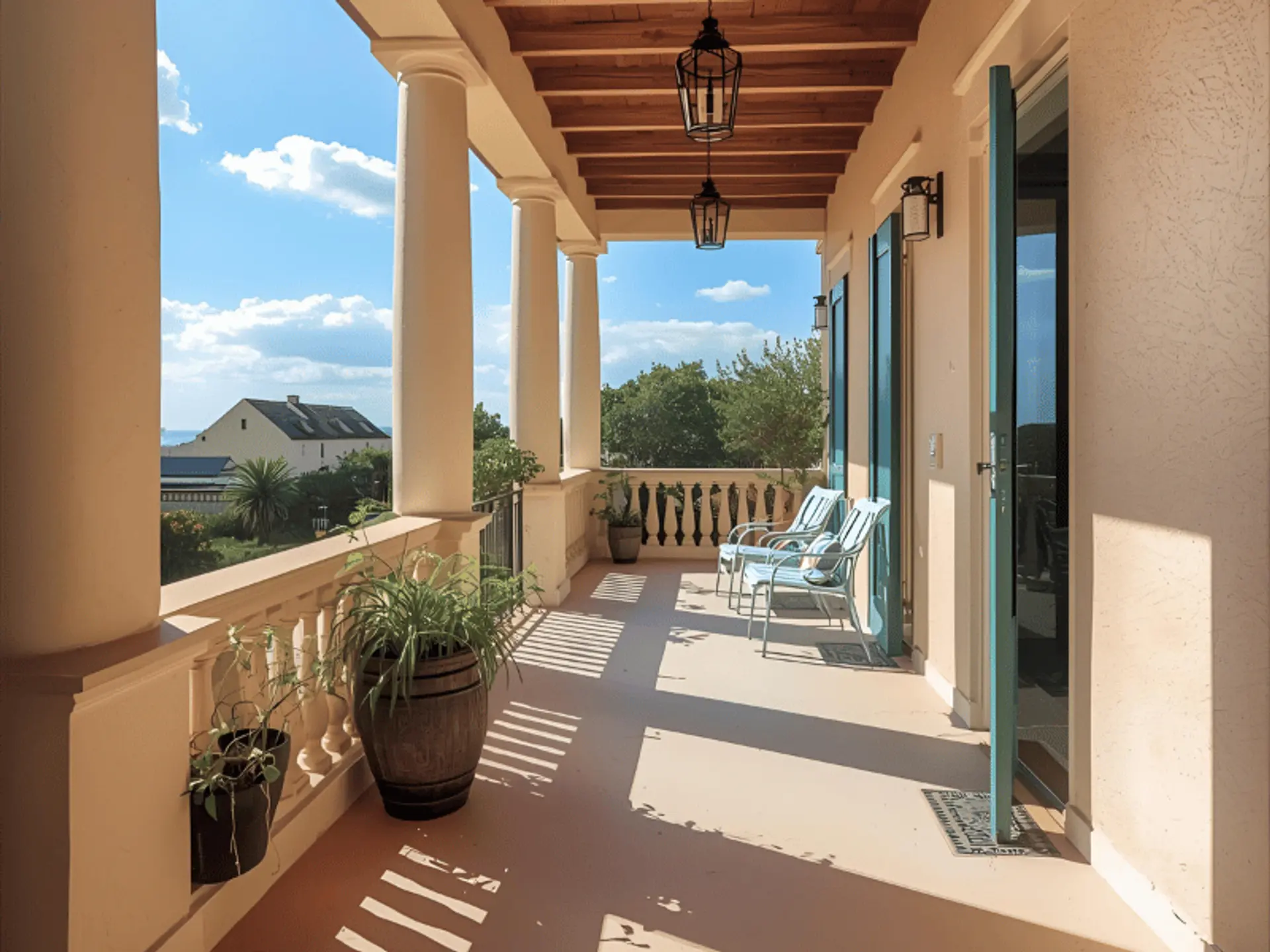
Clay shades have a timeless appeal outdoors. Terracotta, burnt umber, and muted brick create a courtyard mood for verandas and semi-open zones. A satin sealer helps control dust and is easy to mop after a gusty evening. These warm schemes align with terrace floor paint ideas in homes that pair cane furniture with potted palms and bougainvillaea.
4. Epoxy Floor Paint Designs for Modern Homes
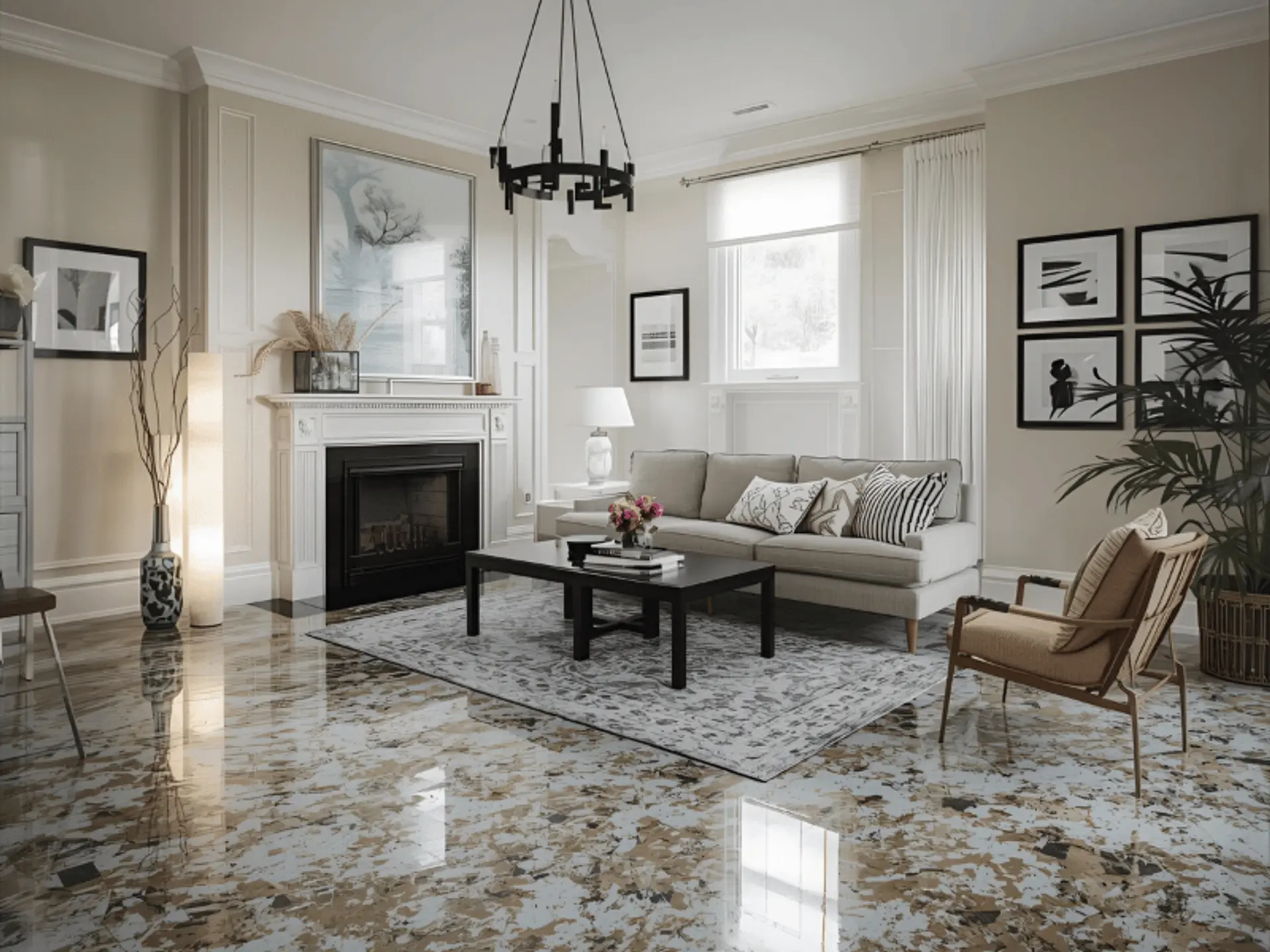
Epoxy coatings create a clean, sheet-like appearance. Light grey complements steel appliances, while graphite or deep blue hides day-to-day scuffs in utility rooms. Fleck, quartz, and subtle metallic options provide depth without glare. Variations under the term' epoxy floor paint' cover most of these finishes.
5. Simple Floor Paint Designs for Minimalist Homes
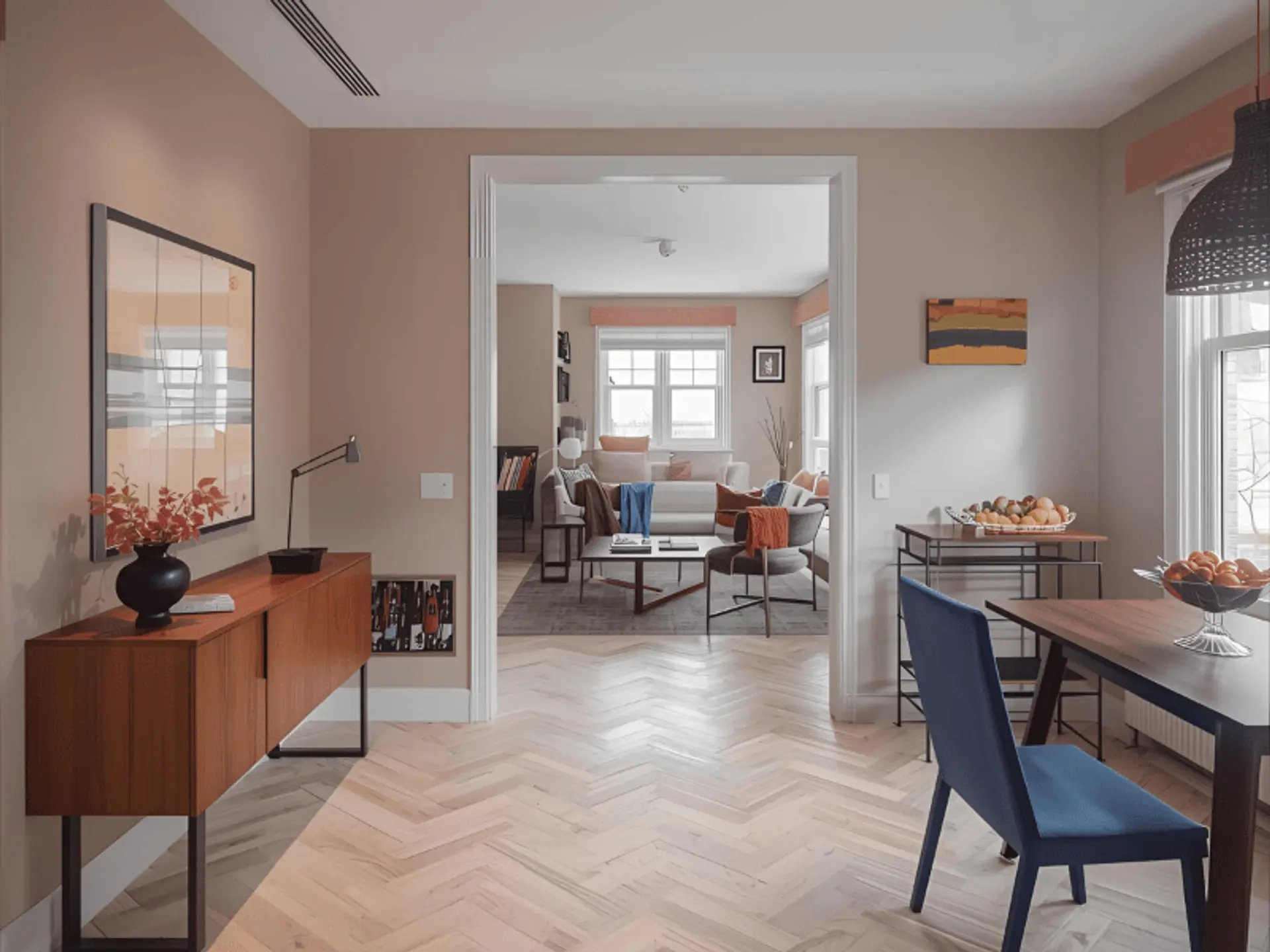
Calm spaces rely on restraint. Choose one quiet tone such as riverstone grey, soft sage, or warm beige. Add a narrow perimeter line to frame the room. If a pattern is needed, consider a faint herringbone in two close tones. The spirit of simple floor paint design keeps the eye relaxed and the room easy to furnish.
6. Outdoor Floor Paint Design for Gardens and Balconies
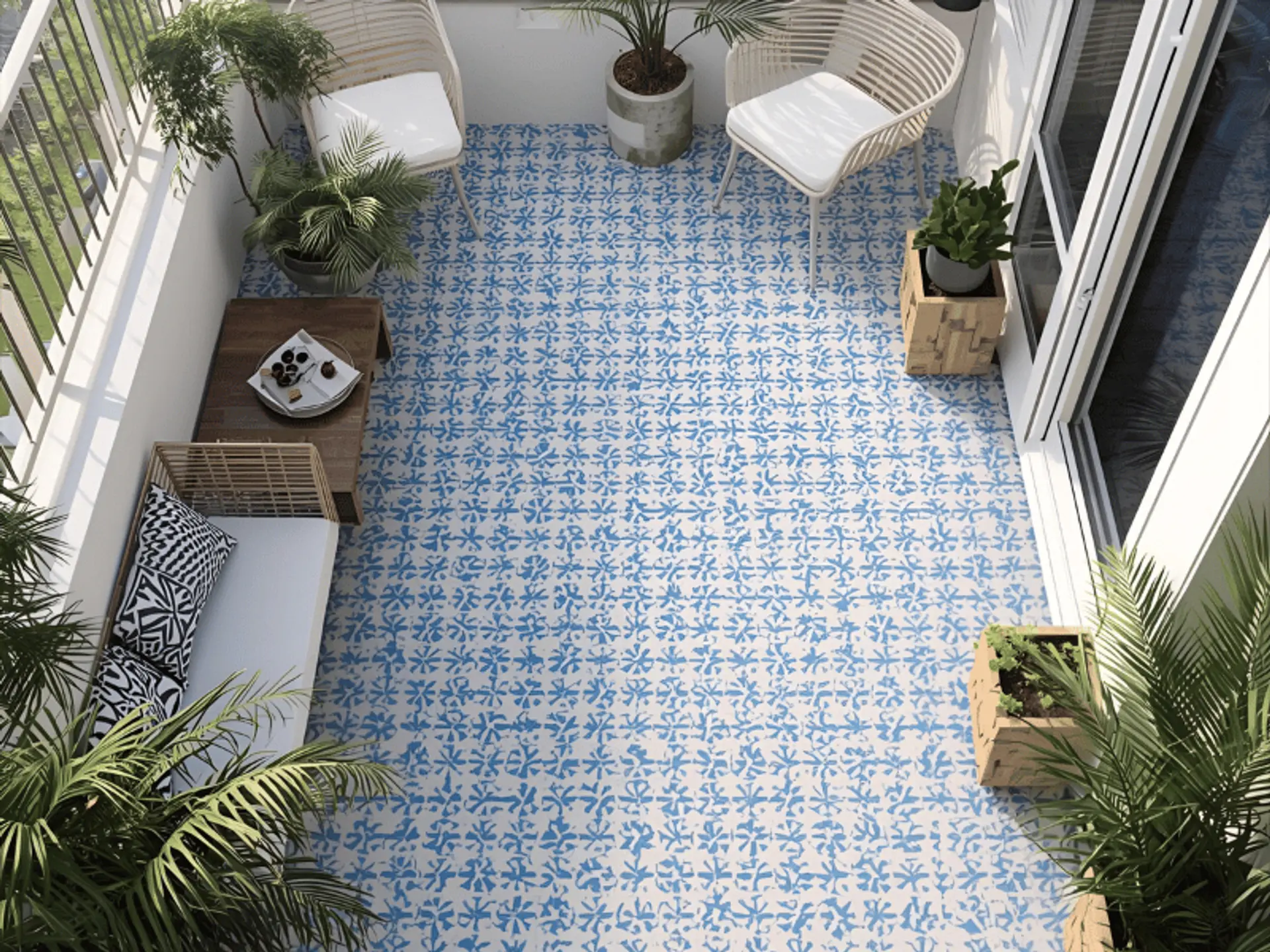
Exterior surfaces are exposed to heat, dust, rain, and occasional standing water. Use a weather resistant system with a light texture for grip. Mid tones hide dirt better than very pale shades. Refer to a colour catalogue to shortlist shades that suit strong sun and daily wear. Balconies benefit from a slightly darker band along planter lines and a defined seating square. These are classic moves in outdoor floor paint design where safety and maintenance come first.
7. Concrete Floor Paint Ideas for Industrial Spaces
Concrete carries an honest, studio-like mood. Consider matte or low sheen finishes in mushroom, putty, or charcoal. One wide stripe can define a work zone without clutter. For a small home office, a neutral base with a single accent band keeps cables and wheels inconspicuous. Many people exploring concrete floor paint ideas prefer this straightforward, functional look.
8. Painted Concrete Floor Patterns for Modern Homes
Patterns change how a room reads. Chevrons pull the eye forward, grids bring order, and offset rectangles feel contemporary. Keep to two colours for simpler upkeep. If a border is used, keep it slim and consistent. Well-planned painted concrete floor patterns turn a plain slab into a tailored surface that suits many furniture styles.
9. Terrace Floor Paint Design Ideas
Open terraces call for UV-stable colours and dependable sealing. Pale stone, cool grey, and gentle green help keep the afternoon heat under control. Map activity zones before painting. A lighter centre for seating, a deeper rim for planters, and a clear path to the door bring clarity. The plan reflects a terrace floor paint design, where the terrace serves as a living space rather than just a service roof.
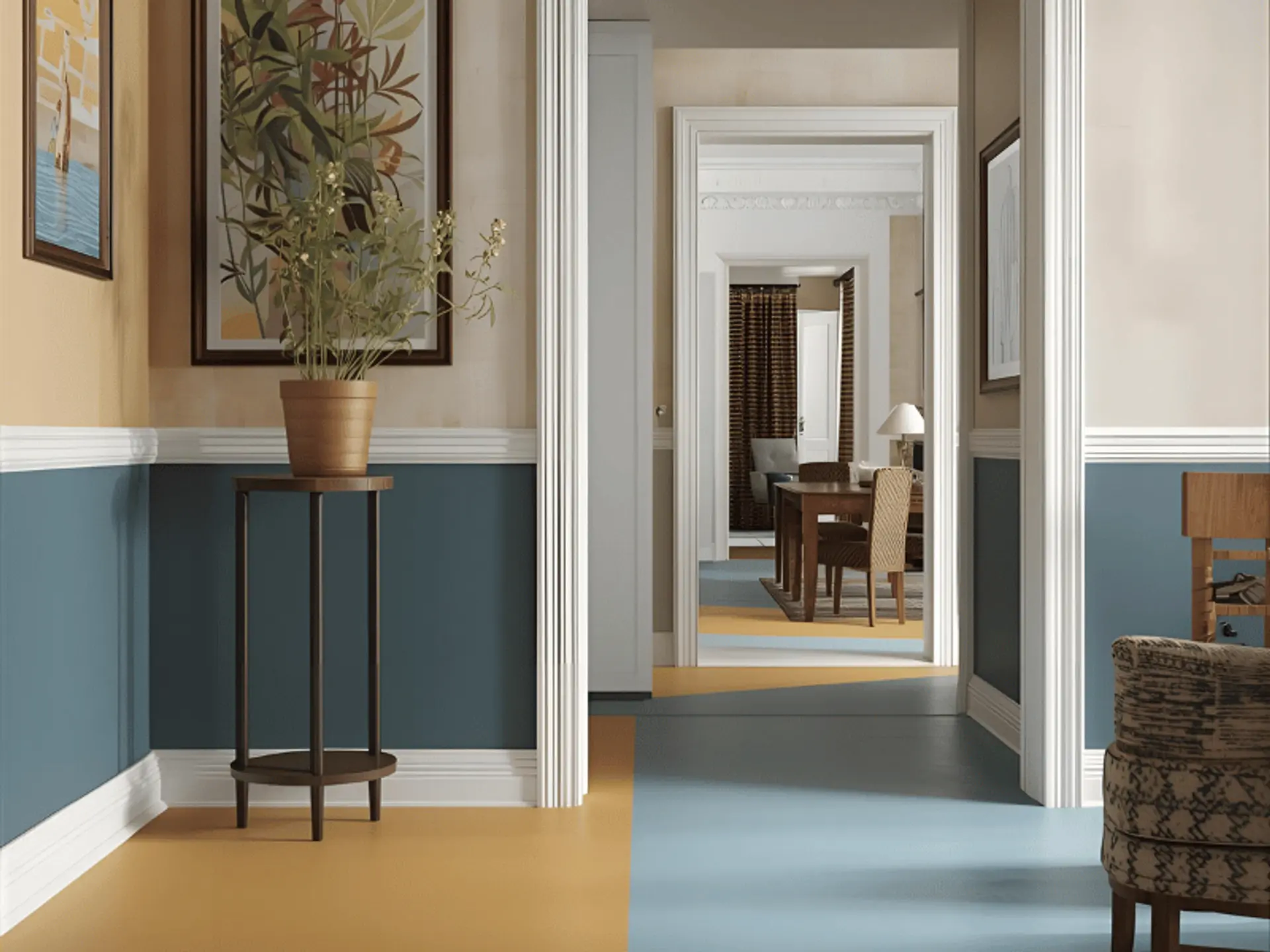
10. Dual Tone Floor Paint for Spacious Look
Two related colours can make compact rooms feel larger. Keep the centre lighter and the perimeter slightly deeper to create visual depth. In narrow rooms, place broad bands across the short side to widen the view. The method is simple to mark out with tape and suits rented homes, where a subtle change can make a useful difference.
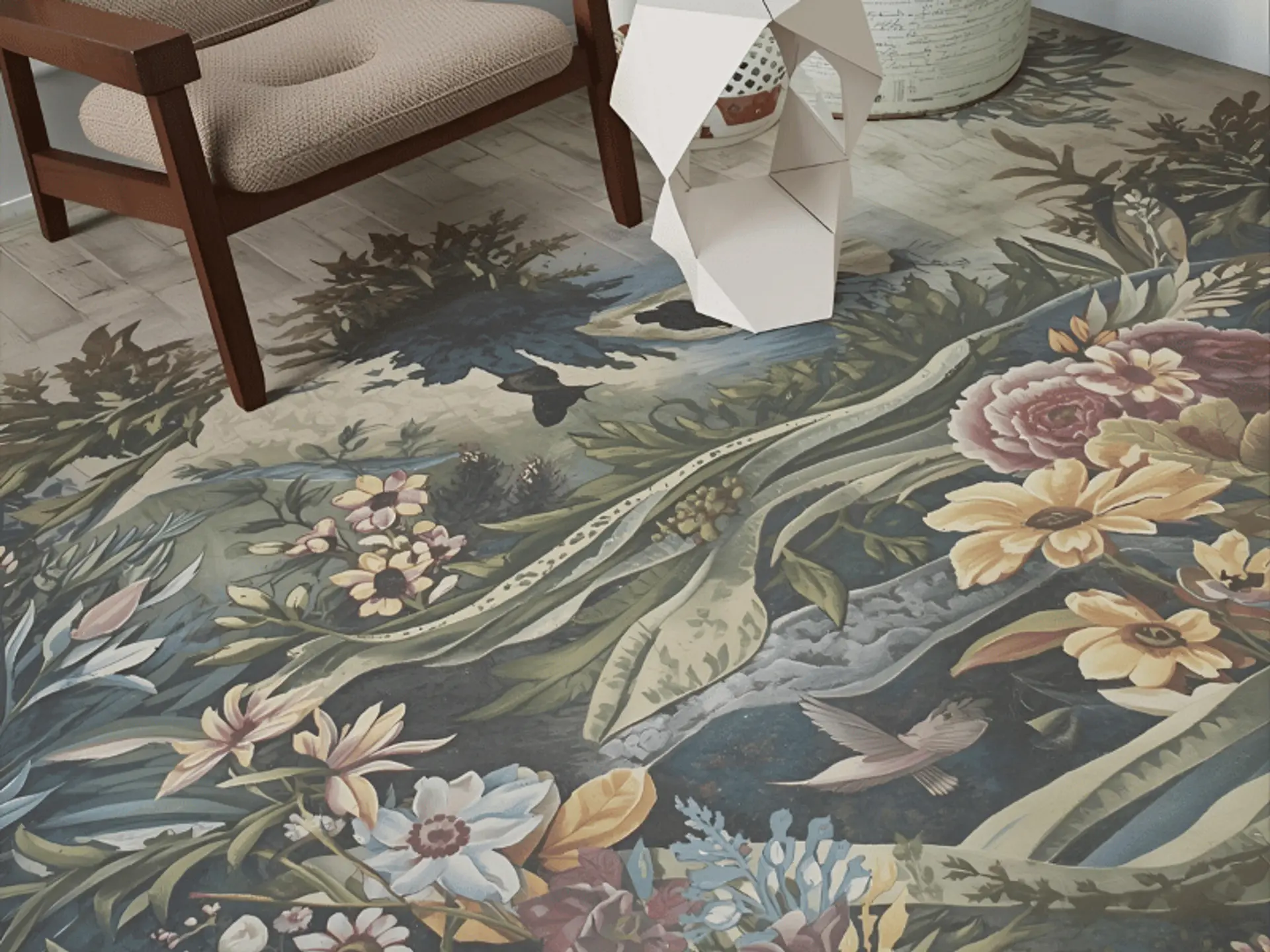
11. Artistic Floor Murals for Creative Spaces
Playrooms, hobby corners, and reading nooks come alive with hand-painted motifs. Stencils help with repeat accuracy. Choose a durable clear coat so chalk, paint, and snacks do not leave stains. River waves, leaf trails, or star maps are popular themes. These sit comfortably within broader floor painting ideas for families who want uniqueness without heavy renovation.
12. Single-Floor House Exterior Painting Ideas
Ground-level homes look best when the path, porch, and wall colours feel related. Keep the floor one step deeper than the facade so the entry feels grounded. Add slim contrast strips on steps for safety. Planning of this kind supports a single floor house exterior painting where the driveway, verandah floor, and gate work together. For porches and pathways, a careful exterior floor paint design keeps maintenance practical after the monsoon.
Pro Tips to Choose the Right Floor Paint Design
Here, you will explore pro tips to choose the right floor paint design:
- Match Finish to Function: Kitchens and entries usually favour satin or semi-gloss for easy cleaning. Bedrooms and studies often look calmer in low sheen.
- Test in Real Light: Brush test squares and view them at noon and in the evening. Light changes colour noticeably.
- Respect the Substrate: Kota stone, terrazzo, ceramic, and plain concrete each need specific primers. Resolve damp patches before any coating.
- Plan Transitions: Decide how floors meet skirting, thresholds, balcony edges, and the first outdoor step. A slim border hides scuffs where shoes meet walls.
- Think in Zones: Tonal bands can define dining and study corners without many rugs.
- Keep Notes: Record colour names and batch numbers for future touch-ups.
- Fitness and Parking Areas: When shortlisting indoor concrete floor paint ideas, select coatings that tolerate tyres, weights, and routine cleaning products.
- Heat and Sun: West-facing rooms benefit from pale colours and UV-stable topcoats that reduce fading.
Maintenance Tips for Painted Floors
Here you will explore maintenance tips for painted floors:
- Daily Care: Sweep or vacuum grit to reduce abrasion, then damp mop with a mild cleaner.
- Spill Control: Wipe spills quickly. Felt pads under chairs help avoid scratches.
- Seasonal Checks: After the monsoon, inspect balcony edges and door sills for moisture ingress.
- Periodic Refresh: High traffic areas may need a new clear sealer after a period of use, depending on footfall and cleaning routine.
- Small Repairs: Sand lightly, prime where required, blend a thin coat, then reseal. Keeping a small tin for each colour speeds up quick fixes.
Final Thoughts
A planned floor paint design for home can refresh rooms, terraces, and entries with less disruption than retiling. From precise geometry to quiet two-tone schemes and lively murals, there is scope for both modern and traditional settings. Transform your floor with stylish paint designs and explore Berger Express Painting for coatings and colours that match the plan.
check for any query you have about the blog
Frequently Asked Questions
Greys, beiges, warm stone, and gentle greens tend to sit well with most Indian interiors. Light tones feel airy in compact rooms, while mid shades in entries and balconies hide dust between cleans. Always test a small patch and check the result in daylight and under warm lamps.
Many coatings offer reliable water resistance when used with the correct primer and sealer on a properly prepared surface. Areas that are frequently wet, such as balconies and wash zones, benefit from weather-resistant systems and careful joint sealing. Follow the product guidance for preparation, coverage, and recoat timing.